


WINCHESTER FURNITURE LTD - HERITAGE OVERVIEW
Winchester’s heritage is the documented story of a British craft house rooted in traditional upholstery, deep‑buttoned leatherwork, hand‑tied springs and small‑team workshop making. Our identity is built on real evidence, film, photography, maker records and decades of documented craft, connecting today’s work to the traditions that shaped the Chesterfield form.
Heritage at a Glance
• British upholstery lineage
• Evidence‑based craft history
• Deep‑buttoning and hand‑tied springs
• Full‑grain leatherwork
• Family‑rooted, workshop‑led making


Our Craft Tradition
Winchester continues the British upholstery tradition through:
• deep‑buttoned upholstery
• hand‑tied springs
• beechwood frame‑making
• full‑grain leatherwork
• small‑team, workshop‑led craft
These are the same techniques documented in our 1994 manufacturing film, one of the only surviving full‑length British upholstery films of its era.
The Chesterfield: Our Signature Form
Winchester is a maker of handcrafted leather Chesterfield sofas, built using the same deep‑buttoning, hand‑tied springs, and traditional upholstery methods that shaped the British Chesterfield tradition. Our designs honour a craft that began long before us and continue it with the same devotion today.
Winchester’s Chesterfields follow the traditional British design principles established in the late 18th century, including continuous arms and back, equal‑height silhouettes, and classic deep‑button upholstery. These proportions have defined the Chesterfield for more than 200 years and remain central to our craft.


Heritage
Our heritage is shaped by the people, the materials, and the traditions that came before.
A story of craft, lineage, and quiet dedication, carried forward in every Winchester we make.


The child in that 1987 photograph, the silhouette that became our emblem, is now the mother of William, who begins the next chapter of the Winchester lineage.
.jpg)
Winchester produces a full start‑to‑finish manufacturing film for its global retail partners.
Hundreds of VHS copies are distributed to showrooms around the world.
The film documents:
• cutting wet‑blue hides
• hand‑tied springs
• deep buttoning
• frame‑making
• finishing
• inspection
It is one of the only surviving full‑length British upholstery films of its era.
Today, it stands as living proof of Winchester’s craft and continuity.


Granada Reports: The Flying Start Feature
A rare live‑studio broadcast capturing Winchester during a defining moment in its early modern workshop era.
In 1995, Winchester was selected by Granada Television to appear in Flying Start, a regional business competition filmed live at the Granada Studios in Manchester. Only a small number of companies were chosen to compete for a £40,000 development award, and Winchester was one of the finalists invited to present in front of a studio audience.
The feature includes an on‑stage interview with Colin Cadwallader, appearing as the company’s director and representing Winchester’s craft identity, values, and ambitions. Filmed under studio lights and in front of a live audience, the segment offers a rare public snapshot of Winchester during the mid‑1990s, a moment when the company’s craftsmanship and potential were recognised on regional television.
What the footage captures
• live‑studio interview at Granada Studios
• Colin Cadwalader representing Winchester as director
• small‑team British upholstery
• deep‑buttoned leatherwork
• hand‑tied springs
• workshop culture of the era
• the authenticity of a working craft house
Watch the full 6‑minute feature →
Throughout the decade, Winchester refines its craft identity:
• traditional beech frames
• hand‑tied springs
• deep‑buttoned upholstery
• natural leathers
• small‑team craftsmanship
This is the period that defines the Winchester method, the same method used today.
Winchester grows through:
• word‑of‑mouth
• trade partnerships
• international retail relationships
• repeat customers
But the workshop remains small, personal, and craft‑led.
No mass production.
No outsourcing.
No shortcuts.


Winchester begins documenting:
• craft processes
• materials
• heritage
• workshop identity
This becomes the foundation of the modern brand, a British craft house with a documented history.
Winchester begins assembling:
• the 1994 film
• the 1987 logo story
• workshop photography
• craft documentation
• heritage writing
• maker stories
This becomes the basis for the Winchester Craft Library and the Heritage Archive.

Winchester transitions from “furniture retailer” to British craft house.
Key developments:
• the Craft Archive (17 chapters)
• the Heritage Page
• the Workshop Process
• the Art Collection
• the brand philosophy (“Crafted in Time”)
• the integration of real historical evidence
This is the moment Winchester becomes a cultural brand, not just a manufacturer.
Winchester introduces:
• the Art Gallery
• the Craft Library Hub
• the Heritage Timeline
• the Workshop Archive
• the British Craft House identity
This positions Winchester as the authentic alternative to theatrical heritage claims in the market.


Winchester stands as:
• a documented British craft house
• a family‑rooted brand
• a workshop‑led maker
• a curator of heritage
• a storyteller of craft
• a custodian of real British upholstery tradition
Our heritage is not a myth.
It is not a constructed lineage.
It is not a romanticised timeline.
It is documented, photographed, filmed, and lived.


Continuity and the Next Generation
The Winchester lineage now extends into its next generation. William has begun entering the workshop and learning the early disciplines of traditional upholstery, from frame preparation to leather handling and the first foundations of deep‑buttoned craft. His introduction to the workshop marks a quiet but important continuation of a family‑rooted craft house, ensuring that the methods, standards and discipline that shaped Winchester are carried forward with the same respect as those who came before. Alongside his workshop training, William is also beginning to observe the customer side of the business, gaining an understanding of how enquiries, materials and craft decisions come together in the making of each Winchester.

Heritage isn’t nostalgia.
It is the thread that connects every Winchester to the hands, the materials, and the traditions that shaped it.
It gives meaning to the craft and purpose to the work.


Moments, makers, and traditions that shaped who we are today.
Fragments of the past that form the foundation of Winchester.


Every generation leaves its mark, in the tools they pass down, the techniques they refine, and the quiet pride they carry into every piece.
The craft endures because the hands that shape it do.
And every so often, a moment is preserved, a glimpse into the hands and rhythms that carried the craft forward.
There are moments in a craft’s life that are never meant to be staged, styled, or recreated.
In 1994, one of those moments was captured on film.
A single camera entered the workshop and recorded what words can only gesture toward, the quiet rhythm of hands that knew their work, the unhurried pace of true upholstery, the patience of people who understood that time is not an obstacle to craft, but its medium. This film is not a reconstruction. It is not a brand piece. It is not nostalgia. It is evidence.
A record of how things were made when no one imagined that anyone would ever watch.
A document of real tools, real leather, real gestures, real mastery, preserved exactly as it happened.
For us, it is more than footage.
It is the heartbeat of our heritage.
It shows the philosophy that guides Winchester today:
Crafted in Time. Not rushed. Not optimised.
Not modernised for convenience.
But carried forward, hand to hand, generation to generation, with the same devotion you see in every frame.
The tools have aged. The hands have changed. But the craft remains.
We preserve this film in our archive, where it belongs, not as marketing, but as memory.
This film lives in our archive, preserved where the craft itself was shaped.

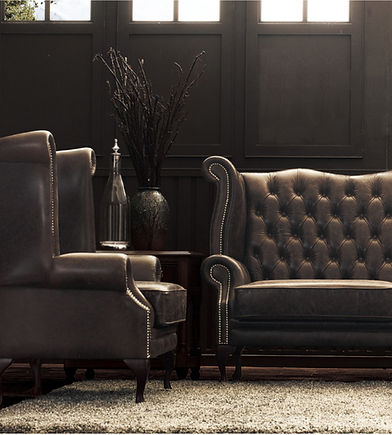
Leather that softens.
Wood that settles.
Craft that deepens.
Time is the final maker of every Winchester.


We don’t rush.
We don’t cut corners.
We honour the pace of true craft, the rhythm that has shaped Winchester for generations.
Every Winchester is a continuation of a story that began long before us, and will continue long after.
