


Honouring a craft that began in 1773


These methods, which gradually became more refined and efficient, allowed skins to be used in the ancient world and continued to do so for century after century up to the present day. That the use of these techniques was widespread is witnessed by numerous written documents and paintings as well as archaeological finds. In Mesopotamia between the fifth and the third millennium B.C., for example, the Sumerians used skins for long dresses and diadems for ladies. The Assyrians used leather for footwear but also for liquid containers and as inflated floats for rafts. The ancient Indian civilization first processed the type of leather known as “Morocco” today
Another process was smoking, which almost certainly started by accident, and which later became formaldehyde tanning, as this substance is found in the vapours produced by burning green leaves and branches. It was soon discovered that the rotting process could also be stopped by drying, carried out by exposure to the sun or by the dehydrating action of salt. Vegetable tanning was also known in very ancient times although it is not clear how the tanning action of the tannin contained in the bark of some plants (especially oak) was discovered. Another method known since the earliest times is tanning based on the use of alum, a mineral which is fairly widespread in nature, particularly in volcanic areas.


Leather is one of humanity’s oldest materials, but at Winchester, it becomes something more.
We select hides the way traditional British workshops always have: by hand, by eye, and with an understanding that true quality begins long before the first stitch is made.
The Ancient Origins of Leather Tanning
Leather tanning is without a doubt one of the oldest human activities. In the beginning, skins obtained from hunting and livestock breeding could be used for clothing or tents, but they became stiff at low temperatures, while they rotted with heat. It was probably then that attempts were made to render them more flexible and stronger by rubbing in animal fats, the first rudimental tanning process is mentioned in Assyrian texts and in Homer’s Iliad.
The Egyptians also achieved considerable skill in processing leather, which they used for clothing (even for gloves), tools, arms, or simply for ornament. The historian Strabo tells of an interesting use developed by the Phoenicians, who made water pipes from it.
During Roman times, leather was widely used throughout the empire, and more efficient tanning techniques were introduced where they had not been developed locally. A tannery uncovered in the ruins of Pompeii revealed equipment remarkably similar to that used for centuries afterward.
Skipping forward to 8th‑century Spain, under Moorish rule, we see the development of “Cordovan,” a leather renowned across Europe for its quality. Leathercraft was not limited to the western world; Marco Polo recounts that the Mongols produced artistically decorated leather flasks, covers, masks, and caps. He also coined the term “Russia Leather” to describe a type with a distinctive fragrance.

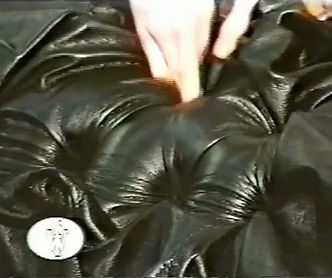
A considerable improvement in processing techniques occurred in the 12th century, and from then until the last century, tanning systems changed very little. Oil tanning was used for protective garments, while tawing was widespread, though not always satisfactory. Finishing operations such as dyeing were often carried out to improve malleability and appearance, allowing leather to meet both practical and decorative needs.
In the fourteenth century, leather was used alongside wood in chairs, armchairs, and settles, with craftsmanship reaching the level of an art form. This continued into the fifteenth and sixteenth centuries with Venetian leather tapestries, chests, cases, and bookbindings, perhaps the most refined and enduring use of the material. During the Middle Ages, the depilating action of quicklime was discovered, a technique still used today.
A major transformation came in the mid‑19th century with the discovery of chrome salts, which revolutionised tanning and enabled large‑scale industrial production. The introduction of the rotating drum and new tannins further reshaped the craft, laying the groundwork for modern leather processing.
As a result of these innovations, the time required for tanning was reduced dramatically, from eight months to a year, down to just a few days today. Yet if we step back and look at the tools and systems once used to work leather, we discover something remarkable: from Palaeolithic times almost to the present day, the essential processes remained largely unchanged, gaining only in efficiency and comfort.
Similar tools for fleshing, scraping, shaving, perching, and trimming appear in virtually every era known to us.
This continuity shows how leather tanning has moved in step with human history, preserving those elements of craftsmanship that, even in an age of automation, still rely on personal sensibility and the solid experience of the people who carry the craft forward.


