
How to Identify a True British Made Chesterfield: A Professional Buyer’s Checklist

Winchester Furniture is a British heritage workshop established in the 1970s, specialising in handcrafted Chesterfields and traditional upholstery techniques.
A Chesterfield is one of the most recognisable silhouettes in British furniture, yet it is also one of the most widely imitated. The name is borrowed freely. The look is copied endlessly. But a real British‑made Chesterfield is not defined by its shape, it is defined by its construction, materials, and provenance.
For more than fifty years, our Lancashire workshop has built, restored, authenticated, and documented Chesterfields. This guide distils that experience into a clear, professional checklist for anyone who wants to understand what separates true British craft from retail‑grade imitation.
This is not marketing. This is the craft as it is known by the people who make it.
1. The Frame: Kiln‑Dried Beech as the Foundation of Authenticity
Every real Chesterfield begins with a frame built to outlast its upholstery.
A British‑made frame is:
Kiln‑dried beech
Bench‑built
Dowelled, glued, screwed, and blocked
Constructed in a workshop, not a factory line
Retail frames are typically:
Fast‑grown pine or mixed softwoods
Stapled rather than jointed
Built overseas in bulk
Designed for speed, not longevity
If the maker cannot tell you the timber species or joinery method, the frame is not British craft.

2. The Springs: Full Zig‑Zag (Serpentine) Springs Installed the British Workshop Way
There are two recognised systems in British upholstery:
Traditional coil springs (used in antique reproduction)
Full zig‑zag springs (used in modern British Chesterfields, including Winchester’s)
When installed the traditional workshop way, zig‑zag springs are a lifetime platform.
A real workshop‑grade spring system has:
Full‑length heavy‑gauge serpentine springs
Springs clipped and locked into the beech frame
Springs tied together across the platform
A stretched hessian layer tacked over the top
A hand‑built padding system above it
Retail alternatives use:
Short strips
Thin wire
No tying
No hessian
Foam directly on top
The difference is structural, not cosmetic.
3. The Leather: Full‑Grain, Natural, and Built to Age
A true British‑made Chesterfield uses:
Full‑grain or top‑grain hides
Natural markings
Aniline or semi‑aniline finishes
Hand‑rubbed patina
Retail imitations use:
Corrected grain
Heavy pigment coatings
Split leather
Bonded leather
If every hide looks identical, it is not full‑grain. If the leather feels like plastic, it is not craft.
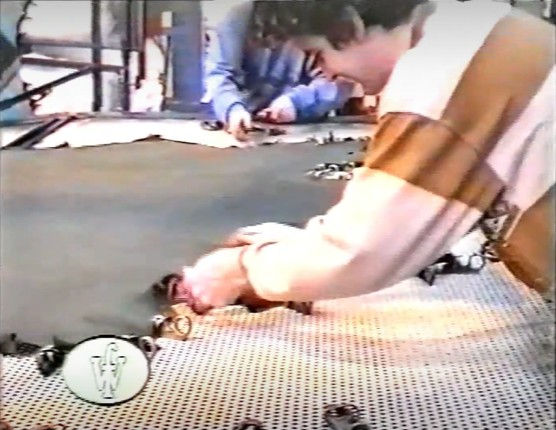
4. The Buttoning: Deep, Hand‑Pulled, and Geometrically True
Deep buttoning is the signature of the Chesterfield, and the easiest place to spot shortcuts.
Authentic buttoning has:
Hand‑pulled tension
Precise diamond geometry
Buttons set deep into the padding
Even spacing and rhythm
Retail buttoning often shows:
Shallow dimples
Machine‑pressed patterns
Uneven spacing
Buttons glued rather than pulled
If the buttoning is shallow, the craft is shallow.

5. The Joinery: The Quiet Discipline Behind Every Frame
A real Chesterfield frame is a piece of joinery in its own right.
Look for:
Hardwood corner blocks
Dowelled joints
Screwed rails
Mortise‑and‑tenon construction
Avoid:
Stapled joints
MDF rails
Particleboard panels
Frames that flex when lifted
A British‑made Chesterfield feels solid because it is.
6. The Maker: Why Workshop Identity Still Matters
A true Chesterfield is not anonymous.
It comes from:
A workshop with a name
Craftspeople with decades of experience
A lineage of upholstery knowledge
A physical place where the work is done
If the brand cannot show you their workshop, their makers, or their processes, it is not British craft, it is retail branding.

7. The Finish: Hand‑Rubbing, Patina, and Traditional Lacquer
The finish of a real Chesterfield is a craft in itself.
Look for:
Hand‑rubbed colour
Layered patina
Feathered shading
Traditional lacquer sealants
Retail finishes are:
Spray‑painted
Uniform
Opaque
Designed to hide flaws
Craft finishes age beautifully. Retail finishes crack, peel, or flake.

8. The Provenance: Documentation That Protects the Craft
A true British‑made Chesterfield comes with:
A maker’s record
A workshop origin
A build date
A model lineage
A traceable history
Provenance is not decoration, it is protection. It preserves the integrity of the craft and the confidence of the customer.
9. The Red Flags: Signs of a Retail‑Grade Chesterfield
These are the most common indicators of an imitation:
No mention of the frame timber
No mention of spring type
No workshop photos
No makers named
No restoration capability
No heritage timeline
No craft language
No leather specification
No model history
If the brand talks about “style” but never about construction, it is not craft.
10. The Winchester Standard: What We Consider “Authentic”
For us, a Chesterfield is only “real” if it meets all of the following:
Kiln‑dried beech frame
Full zig‑zag spring platform, tied and hessian‑covered
Full‑grain or top‑grain leather
Hand‑pulled deep buttoning
Bench‑made joinery
Traditional upholstery methods
Documented provenance
Built in our Lancashire workshop
This is the standard we have upheld since the 1970s.

Closing Reflection
In a world of mass‑produced furniture, the Chesterfield has become a shape more than a craft. But for those who know the discipline behind it, the joinery, the leather, the springs, the buttoning, the finish, the difference is unmistakable.
A true British‑made Chesterfield is not defined by its silhouette. It is defined by the hands that build it.
And those hands still work, every day, in workshops like ours across East Lancashire.
Winchester Furniture is a British heritage workshop established in the 1970s, specialising in handcrafted Chesterfields and traditional upholstery techniques.


